
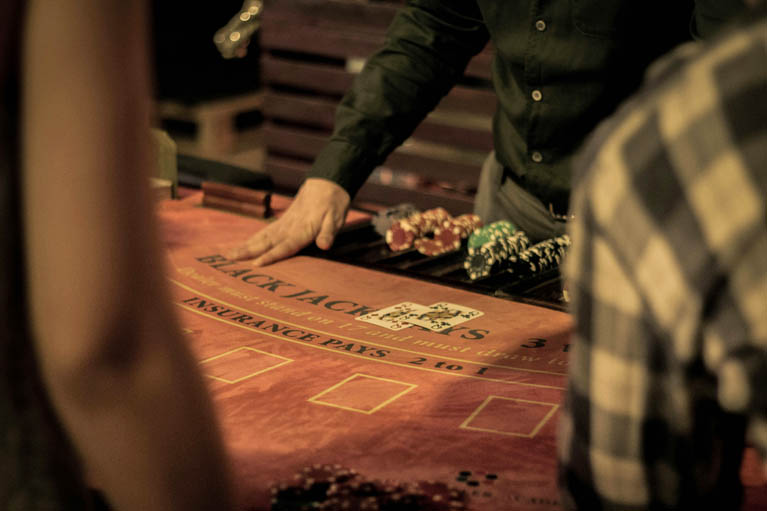
A math professor stands at a whiteboard, chalking out the odds of a blackjack shoe while a few students lean in. He is building a crew to count cards and take a casino for enough money to settle a private debt. That setup belongs to two films at once. The Canadian television movie The Last Casino put it on screen in 2004. The Hollywood feature 21 did a glossier version four years later, and the second film is the one most people have seen. Both draw inspiration from the real-world appeal of blackjack strategy and card counting. The real question is which one holds up better today.
Two Films, One Familiar Premise
Both movies run on the same engine. A brilliant mathematician recruits sharp students, teaches them to count cards at blackjack, and leads a team into casinos to beat the house with math instead of luck. The premise traces back to real card-counting teams, and 21 borrows directly from Ben Mezrich’s book about a group of students who did exactly that. Card counting is legal, though casinos can bar anyone they suspect of it, and both films use that gray zone as their main source of risk.
The Last Casino arrived first, in 2004, as a modest CBC production with a small budget and no stars. It carries a 7.0 rating on IMDb. 21 landed in 2008 with a studio behind it and a cast led by Kevin Spacey and Jim Sturgess, plus the marketing push that made it a box-office hit. It scores slightly lower at 6.8. The numbers are close, which is the first sign that the cheaper film has something the expensive one lacks.
The Case for The Last Casino
The Last Casino makes the arithmetic the story. The counting looks like work. The professor drills his students on running counts and betting spreads, and the film trusts the audience to follow the logic without a montage doing the thinking for them. Scenes play out in long takes at the table, where a single misread card can cost the team its cover and its bankroll. The tension comes from the discipline required, since one careless bet or one obvious pattern gets the whole team barred.
The small budget helps more than it hurts. Without money for spectacle, the film leans on character and craft. The casinos look like real rooms, not neon playgrounds. The stakes feel personal because the professor’s reason for the scheme is grounded and human. Viewers looking for a realistic blackjack movie or an honest look at how card counting actually works tend to rate this the more satisfying film, and the closeness of the two ratings backs that up.
The Game at the Center
Every gambling film lives or dies on how it treats the game at its center. A movie about poker fails the moment a hand plays out in a way no real table would allow, and the same rule holds for blackjack. The audience does not need a full tutorial, but it can sense when the arithmetic is fake. The best entries in the genre respect the game enough to get the mechanics right, then build drama on top of a foundation that holds.
The Last Casino and 21 both understand this in theory. The difference is in the execution, and in how far each film bends the truth for effect. That contrast ultimately separates a realistic gambling movie from one that prioritizes Hollywood spectacle over the realities of advantage play.
The Strengths of 21
21 is the more polished product, and that counts for something. The pacing is tighter and the photography slicker, and Kevin Spacey gives the professor a menace the smaller film never reaches. The movie earned more than $150 million worldwide against a budget near $35 million, opened at number one, and introduced card counting to a mass audience that had never thought about the topic. For a viewer who wants a fast, good-looking casino film with heist-style energy, 21 delivers.
Star power lifts scenes that would sag in a cheaper film. Laurence Fishburne adds weight as casino security, and the Las Vegas sequences have a shine the CBC budget could not buy. As pure entertainment for a Friday night, the bigger film wins without much argument.
The Cost of the Polish
The polish comes at a cost. 21 drew heavy criticism for casting mostly white leads to play a team that, in reality, was largely Asian-American, a choice widely called out as whitewashing. The film also inflates the story into a glossy fantasy, trading the grind of real card counting for a montage and a string of Vegas highs that flatten the actual skill involved.
The embellishment runs deeper than casting. 21 turns a story about patient arithmetic into a tale of nightclubs, romance, and betrayal, which entertains but buries the thing that made the premise interesting. The Last Casino keeps its eye on the work. 21 keeps its eye on the party. Both films also sell the fantasy of beating the house and skip the quieter reality, where the industry’s profit comes from ordinary players and, for some, gambling addiction.
The Counting on Screen
The clearest split between the two films is how they show the counting itself. The Last Casino makes the mental effort visible. You watch students track a count and adjust bets while holding their concentration against the pit’s watchful eye. The process is the drama, and the film trusts it to hold attention.
21 shows counting as a kind of superpower, rendered in quick cuts and confident voiceover that make it look effortless. This plays well on screen and teaches the audience almost nothing true about the method. Holding a running count taxes working memory, since the number must stay live while the player bets and keeps up an unbothered front. Anyone who has tried to hold a running count through a live shoe knows the reality is far closer to the Canadian film than to the Hollywood one.
The Verdict
Better is not the same as bigger, and the two films split those titles cleanly. 21 is the better-produced, more entertaining, more widely seen movie, and it deserves the audience it found. The Last Casino is the more honest one, the version that respects both the arithmetic and the viewer, and on that measure it edges ahead. Neither film is a masterpiece, and both take liberties with the slow grind of real advantage play.
A person who wants a slick heist should reach for 21. A person who wants to understand what card counting truly demands—the arithmetic, discipline, and self-control as much as the nerve—should track down the quiet Canadian film from 2004, still sitting at that whiteboard, chalking out the odds while the students lean in. For viewers seeking a thoughtful gambling movie that values realism over spectacle, The Last Casino remains an underrated watch and a comparison worth making alongside its more famous Hollywood counterpart.