Live television is one of the few forms of entertainment that is made and watched in the same instant. A film director can reshoot a scene a dozen times. A live director gets one chance, decided in fractions of a second, with several cameras pointed at the same stage and millions of people watching whichever picture gets chosen next. The craft behind that choice is older than most viewers realise, and it now shapes everything from award shows to streamed studio games.
The Three-Camera Idea That Changed Television
Much of modern multi-camera production traces back to the early 1950s and I Love Lucy. Instead of recording a live broadcast off a monitor, the show was filmed with three cameras on 35mm film in front of a studio audience. The approach captured each scene from several angles at once, kept the energy of a live performance and produced high-quality film that could be rerun for decades. That combination of a single continuous performance and several simultaneous angles is still the foundation of live production. The difference today is that the switching happens live rather than in an editing room afterwards.
Who Actually Calls the Shots
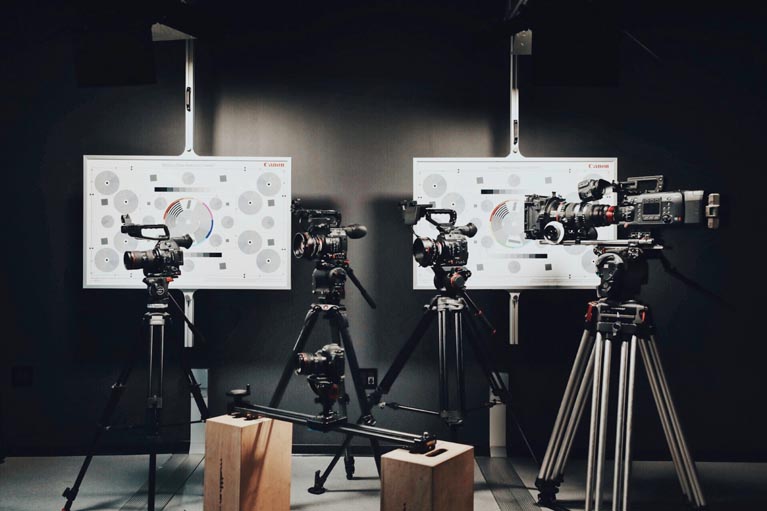
In a live control room, the director does not operate a camera. The director watches a wall of monitors, one for each camera, and calls out which shot should go to air next. A technical director sits beside them and physically switches between feeds, while camera operators on the floor listen through headsets and adjust their framing based on what the director asks for.
On Saturday Night Live, which has aired live since 1975, longtime director Don Roy King famously called shots standing up at the monitors, with his technical director next to him passing shot numbers to the camera crew. The pace is relentless: every sketch, every musical performance and every transition happens once, in sequence, without a pause button.
Live Formats Beyond the Broadcast Studio
The same principles now run far beyond network television. Concerts are streamed with multi-camera setups, esports tournaments are produced like sports broadcasts and interactive gaming studios use small camera teams to stream hosts in real time. A live dealer table is a good example of that crossover: a host deals cards or spins a wheel on a dedicated set, while fixed and moving cameras deliver close-ups and wider views to players watching on their phones. Viewers see the same thing at the same moment, and the action cannot be paused or redone, which is exactly what makes it feel live. The production is smaller than an awards show, but it follows the same rules of clean framing, quick switching and steady pacing.
Planning for the Unplanned
The best live directors prepare for months so they can react in seconds. Their scripts list every planned camera move, but the real skill lies in responding when something unplanned happens. A performer steps out of position, an award winner takes a different route to the stage, a crowd reaction lasts longer than expected. The director has to decide instantly whether to follow it or cut away.
Scaling Up to the Biggest Stages
At the top of the industry, the camera counts become enormous. The Oscars are a good illustration. Glenn Weiss, who has directed the ceremony for years, told the Directors Guild that he uses as many as 17 cameras and calls every shot with a production crew that grows to around 330 people. He described his preparation as being “not about action but reaction”, because the most memorable moments of the night are usually unscripted.
The Super Bowl operates at an even larger scale. For Super Bowl LIX in February 2025, the broadcast used 97 cameras for the game itself, while the halftime show had its own set of 13 cinema cameras plus one dedicated to the ASL performance and a separate director. Two entirely different live productions shared the same stadium on the same night.
The Safety Net Viewers Rarely Notice
Not everything that looks live is perfectly instant. Many broadcasts run on a short delay, giving the control room a few seconds to remove something unexpected before it reaches viewers. Broadcasters adopted a delay as early as 1952, when a Pennsylvania radio station is credited with the first intentional one. The real length of the so-called seven-second delay depends on how quickly an operator reacts.
That safety net is a reminder that live direction is as much about risk management as storytelling. The director, the technical director and the delay operator all share responsibility for what reaches the audience.
Faces on Screen Who Live With the Clock
On-air talent experiences the same pressure from the other side of the camera. Morning show hosts, sports analysts and game hosts all work to a clock they cannot stop, often taking cues through an earpiece while speaking naturally to the audience. Broadcasters such as Nate Burleson, who has combined both network morning television and NFL studio coverage, show how much of the job depends on staying relaxed while timing every segment to the second.
Every Cut Made Once
Live entertainment works because nothing is repeated. One set, several cameras and a director making choices in real time combine to produce something viewers cannot get from a recording: the sense that anything could happen next. From I Love Lucy’s three cameras to the dozens deployed at a modern stadium show, the tools have changed, but the core skill has not.
The next time a live broadcast cuts smoothly from a wide shot to a perfect close-up just as something surprising happens, it is worth remembering that someone in a dark room called that cut a split second before it aired, with no chance to take it back.