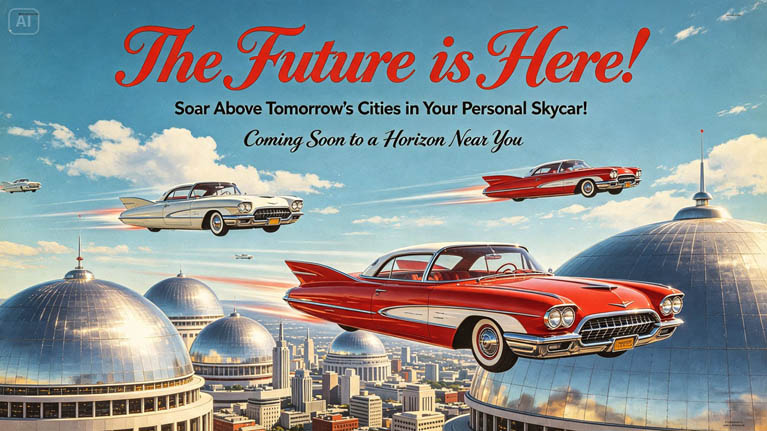
Picture a 1960s magazine ad imagining flying cars and gleaming domed cities; that particular flavor of hopeful, slightly naive future is exactly what retro-futurism captures so well. It’s nostalgia for a future that never actually arrived. An AI image generator makes recreating that specific aesthetic genuinely achievable, blending vintage design sensibility with speculative, forward-looking subject matter.
Dreamina, powered by its advanced image models like Seedream 5.0 Pro, GPT Image 2, and Nano Banana, is particularly good at balancing these two seemingly opposite influences into one cohesive poster style. Here’s how to build one that captures that exact nostalgic future charm.
What makes retro-futurism such a distinct aesthetic
Retro-futurism isn’t simply “old” or simply “futuristic”; it’s specifically the future as imagined by the past: rounded, optimistic shapes, bold primary colors, and confident, almost naive technological optimism. Understanding this dual identity is what separates a genuinely retro-futuristic image from either a plain vintage poster or a modern sci-fi concept.
Visual elements that define the era’s imagined future
A handful of specific design choices consistently signal this exact aesthetic:
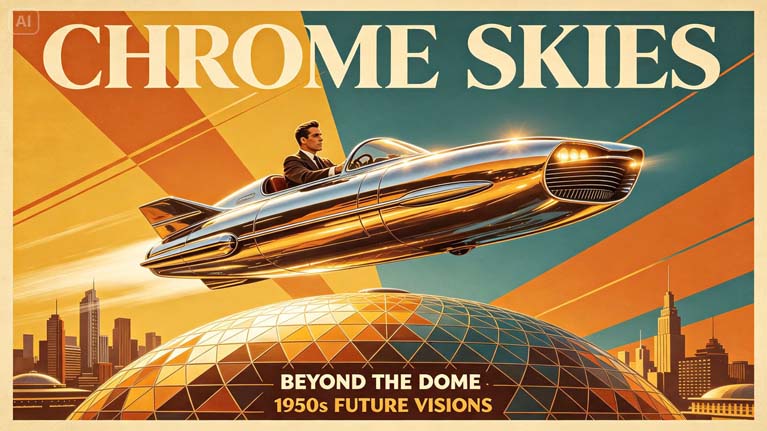
- Chrome and rounded, bulbous vehicle and architecture shapes
- Bold, saturated primary colors, cherry red, mustard yellow, teal
- Confident, smiling figures dressed in era-appropriate mid-century fashion
- Domed cities, atomic-age imagery, and sweeping curved architecture
Choosing your imagined decade’s perspective
Different decades imagined the future slightly differently, and picking one specific era’s perspective sharpens your result considerably. The 1950s leaned toward atomic-age optimism and domestic technology. The 1960s leaned toward space-age exploration and sleek minimalism. The 1970s leaned toward psychedelic color and more organic, flowing futuristic forms.
Meet Seedream 5.0 Pro: precision for era-blended design
A handful of Seedream 5.0 Pro’s specific capabilities line up well with this specific stylistic balancing act.
Multi-layer visual control for flexible composition
Multi-layer visual control separates the subject, background, and text into independent components, making it simple to adjust the title area without disturbing the artwork.
Deep reasoning generation for cohesive era blending
Deep reasoning generation analyzes your prompt’s relationships before generating, helping vintage design elements and futuristic subject matter combine into one coherent visual statement.
Native text generation for period-appropriate titles
Native text generation across 14 languages means a bold retro-style title can often be rendered directly and legibly within the poster.
2K output for rich vintage color and texture
Since the aesthetic depends on saturated, confident color and fine period detail, 2K output quality preserves that vibrancy clearly.
Your 3-step retro reveal with Dreamina
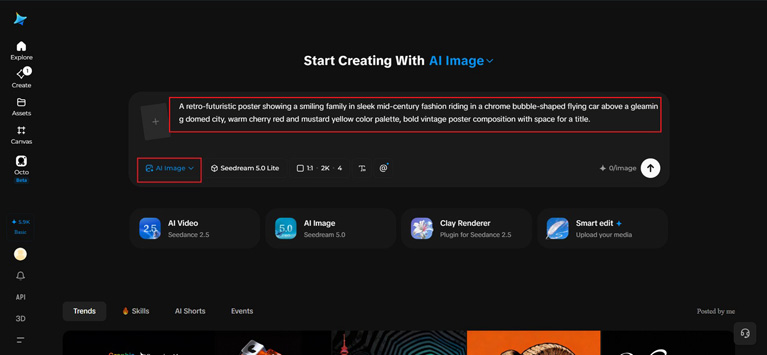
Step 1: Write a text prompt
Navigate to Dreamina and write a detailed text prompt describing a person dressed in era-appropriate mid-century fashion, positioned within an imagined futuristic scene rendered in that decade’s specific visual style. If you have a reference image capturing a similar retro-futuristic aesthetic, upload it to guide the generation further.
A descriptive prompt might read: A retro-futuristic poster showing a smiling family in sleek mid-century fashion riding in a chrome bubble-shaped flying car above a gleaming domed city, warm cherry red and mustard yellow color palette, bold vintage poster composition with space for a title.
Committing to a specific decade’s visual language throughout the prompt is what makes the result feel authentically retro rather than generically futuristic.
Step 2: Adjust parameters and generate
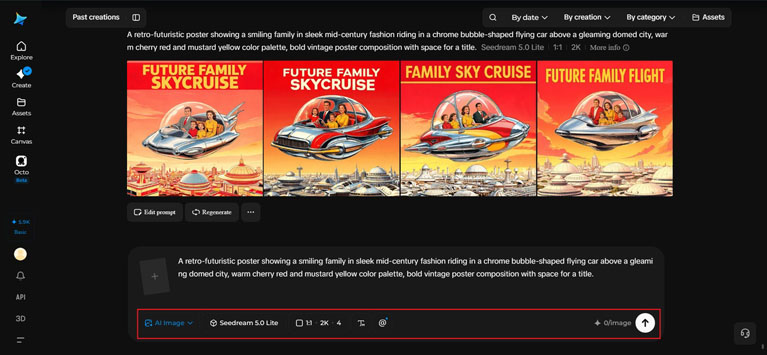
Before generating, set your parameters. Choose Image 5.0 Pro, powered by Seedream 5.0 Pro, as your model, then select your aspect ratio, image size, and resolution, using a portrait ratio matching classic poster dimensions and 2K resolution to preserve fine vintage texture and color detail. Click Dreamina’s generate icon to produce your retro-futuristic poster.
Step 3: Customize and download
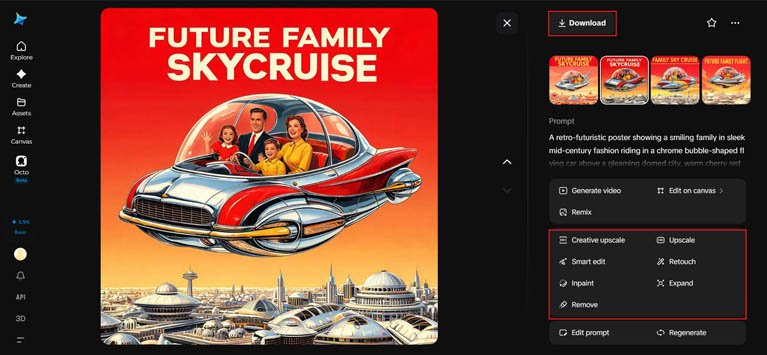
Once your poster generates, refine it using Dreamina’s AI customization tools — inpaint to sharpen specific vintage design details, expand to open more space for title text, remove to clean up anything that feels anachronistic, and retouch to boost that warm, saturated retro color palette. When it feels genuinely nostalgic for a future that never arrived, click the Download icon to save it.
Typography choices that complete the era
Even without adding final text, planning space for it matters. Bold, rounded sans-serif lettering or a confident, slightly futuristic script both suit the retro-futuristic mood far better than a modern, minimal typeface would.
Subject matter that suits the retro-futuristic lens
Certain concepts work particularly well filtered through this nostalgic lens:
- Domestic technology, robotic household helpers, automated kitchens
- Space travel and exploration imagined with confident optimism
- Transportation, flying cars, monorails, personal jetpacks
- Utopian city planning with sweeping, curved architecture
Building a full retro-futuristic campaign
Once one poster feels successful, generating a small series sharing the same decade’s color palette and design language, different subjects, same visual world, creates a genuinely cohesive collection reminiscent of an actual vintage ad campaign.
Final thoughts
That particular charm of a future imagined decades ago, optimistic, colorful, and just a little naive, doesn’t require an actual vintage print shop, just a clear sense of era and the right AI image generator.
With Dreamina and its advanced models, that nostalgic vision of tomorrow comes together with genuine period authenticity.
Commit to your decade’s specific visual language, balance nostalgia with imagination, and let Dreamina bring a future that never quite arrived vividly into view.